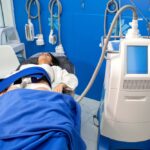
Too often, liposuction is driven by technology and associated marketing rather than by the training and skill of the medical practitioner. You have seen or heard the frequently slick ads touting the amazing outcomes that can be yours when you have your liposuction using “their” miracle machine. Such may or may not include the following:
SmartLipo™ Slimlipo™ LipoLite™ Etc.™
The most important factor is not the machine. It is the doctor performing the liposuction. No machine can correct for poor technique, lack of experience, improper training and a lack of appreciation and understanding of aesthetics.
Unfortunately, many of those physicians (or clinics) that advertise and use these liposuction machines, can be characterized by one or more of these deficiencies. They may market themselves as cosmetic surgeons (possibly because they took courses, etc.) but, in fact, their primary medical training was in family care, internal medicine, emergency medicine, cardiology and so forth.
You don’t see the word “surgery” attached to any of these. That should also serve as a warning.
There are general surgeons who do use these liposuction machines. However, their training is in areas completely unrelated to liposuction and the aesthetic realm. Another hint: most plastic surgeons first train in general surgery and THEN undergo at minimum of an additional two to three years of specialized training in plastic surgery before opening their practices. It must just be that the additional training and experience is important.
So – who do you want to have performing liposuction on your body?
Thought so!
Make sure that your doctor a plastic surgeon who is board certified by the American Board of Plastic Surgery. I am and have been practicing in the Scottsdale and Phoenix area going on 25 years.
Now, for a little levity, check out this video touting an amazing suction machine.
Steven H. Turkeltaub, M.D. P.C.
Scottsdale and Phoenix, Arizona
A study presented at the recent American Society of Plastic Surgeons Annual Meeting suggests that for some patients, liposuction alone or in combination with other fat removal procedures such as a tummy tuck, may have long term beneficial effects on health. Incredibly then, seeking to be more attractive or beautiful through liposuction may be beneficial not only for one’s mental well-being but it may also result in improved physical health.
A study was performed by plastic surgeon Dr. Eric Swanson and colleagues from Kansas which evaluated a variety of parameters that could be measured in the blood, both before and after liposuction. This involved a total of 322 patients over a year period. Among the blood tests performed were those for triglycerides, cholesterol, LDL, HDL and white blood cell count. These were assessed with regard to procedure (liposuction alone versus with a tummy tuck) and the patient’s preoperative weight, BMI (body mass index or weight as relates to height) and lab tests.
Among the findings was that patients who had an elevated preoperative triglyceride level experienced an average 43% reduction in the level following surgery. Furthermore, 62% of these patients ended up with normal triglyceride levels following their liposuction. This effect was more noticeable in those who were not markedly overweight. Patients who started with normal triglyceride levels experienced no significant change following surgery. With regard to health risks, elevated triglyceride levels are associated with type 2 diabetes, stroke, coronary artery disease and peripheral vascular disease.
Another interesting finding was a statistically significant reduction in the white blood cell (WBC) count noted at 3 months following surgery. This is quite noteworthy because previous studies have shown that individuals with higher average WBC counts have a significantly greater risk for coronary heart disease than those with lower levels. There were no significant effects on cholesterol, LDL and HDL levels.
Much more research will need to be performed to substantiate and clarify this relationship of liposuction, fat removal and the ensuing positive metabolic effects. Wouldn’t it be nice to know that not only will you look and feel much better following liposuction but that it is also great for your health.
If you would like more information on liposuction or on any other plastic surgery procedure that I perform or to schedule a consultation with me, please call my office at 480-451-3000.
Steven H. Turkeltaub, M.D. P.C.
Scottsdale and Phoenix, Arizona
Aside from the love handles and breasts, an area that many men would like to improve the appearance of is their abdomen. Many note localized areas of fat; others don’t like the generalized protuberance. They are hoping that liposuction will be able to address their concerns.
Men do have fat distribution of their abdomen that is distinctly different from that of women. As a result, this can translate into potentially different recommendations and approaches. Whereas most of the fat of the abdomen in women is situated just deep to the skin where it can be removed utilizing liposuction, a substantial amount of the fat in men is actually located inside the abdomen around the bowel where it is not accessible through liposuction.
I do see many men with protuberant abdomens (beer bellies) hoping that a few hours of liposuction will provide them with fairly flat tummies, though not necessarily with a six-pack. Unfortunately, such is not the case when the majority of their fat is intra-abdominal. The treatment in these situations, at least initially, is considerable weight loss.
Not a candidate for abdominal liposuction. Fat is largely inside the abdomen.
A lot of men do present with either localized or generalized fat deposits of their abdominal wall which can be successfully treated with ultrasonic assisted liposuction resulting in a flatter and more sculpted appearing tummy. This can be combined with liposuction of other areas as well as with other cosmetic procedures.
If you would like more information on liposuction of the abdomen or other areas, or for any other plastic surgery procedure that I perform, please feel free to contact my office at 480-451-3000. My office would also be happy to schedule you for a complimentary consultation with me.
Steven H. Turkeltaub, M.D. P.C.
Scottsdale and Phoenix, Arizona
For many years, liposuction has been one of the most commonly requested cosmetic plastic surgery procedures one that I commonly perform. Ideally, it is employed to remove unwanted fairly localized fat deposits in various areas of the body in order to surgically create a sculptured, desired improvement.
A question that many of my patients have frequently asked me over the years is does the fat come back in areas that have been liposuctioned or does it go elsewhere if one gains weight. With little previous science to provide a definitive answer, my explanation has been that liposuction removes fat cells so there would be fewer cells to manifest changes (enlargement) compared to untreated areas. As a result, effects from weight gain it would be more likely to be seen elsewhere.
Finally, there does appear to be a scientific answer and it does, indeed, seem to support this explanation.
A study was performed and recently presented at the American College of Sports Medicine Annual Meeting that evaluated patients who underwent smaller volume liposuction (around 2 pounds removed). They were divided into two groups where half were involved in a postoperative exercise regimen while the other half was not. Four months following surgery, both groups weighed the same which was near their preoperative weight but they also maintained the reduced volume of their liposuctioned sites that was seen after surgery.
There was, however, one interesting and significant difference between the two groups. What was noted was that there was an increase in fat deposition intra-abdominally in the non-exercising group which was not seen in the group which worked out.
How can this be generally interpreted?
It seems that fat deposits or enlargement will preferentially go elsewhere (in this case, intra-abdominally) as compared to the treated sites when one puts on weight. As a result, even with some weight gain, much of the contouring result should be maintained. Furthermore, if one works out regularly and maintains a stable weight, there will be little additional deposition of fat.
If you would like more information on liposuction or on any other plastic surgery procedure that I perform or if you would like to schedule a complimentary consultation with me, please call my office at 480-451-3000.
Steven H. Turkeltaub, M.D. P.C.
Scottsdale and Phoenix, Arizona
Liposuction is the popular plastic surgery procedure that ideally is employed to remove localized fat deposits in order to provide a person with a more sculpted, desirable appearance in the affected area. Well performed liposuction in patients who are good candidates for this procedure can yield quite attractive and rewarding results. But that is not the end of the story!
The postoperative care is also an important component in the overall outcome. Expertly performed surgery can be sabotaged by indiscretions and an inadequate postoperative regimen. One area that many patients ask about relates to the wearing of compression garments.
Paraphrasing one of Shakespeare’s unforgettable questions: To wear or not to wear a garment – that is the question? (And for how long?)
Wearing a well designed and fitting garment following liposuction has been shown to reduce swelling and bruising in those areas. In fact, at times, the bruising in the non-covered areas stand out in all their multi-colored glory and in stark contrast to the often minimal bruising present in the compressed areas, making evident the advantage of the latter. In addition, bruising can sometimes lead to permanent discoloration of tissues – not a desirable outcome.
How long is long enough to wear a garment like a girdle or binder?
There is no one definitive answer. Some plastic surgeons will have their patients wear a garment for a few days to a week or more. Others require several weeks. Then, there are others who have their patients use a garment for 3 months or even longer. This, to me, is quite excessive, unnecessary and a major inconvenience and annoyance to patients.
The recommendations that I give to my patients are individualized, being influenced by multiple factors including the area(s) suctioned and the volume of fat removed. For areas such as the stomach, flanks, thighs, knees and back, I generally recommend 1 – 2 weeks. With liposuction of the breasts for men in the treatment of gynecomastia, I usually recommend around 2 weeks. During your consultation as well as in the postoperative period, this issue is discussed and modified as needed.
If you have any questions regarding liposuction or on any other plastic surgery procedure that I perform or if you would like to schedule a complimentary consultation with me, please call my office at 480-451-3000.
Steven H. Turkeltaub, M.D. P.C.
Scottsdale and Phoenix, Arizona
A very common question that I am asked by my patients regarding liposuction in Scottsdale is “How much fat do you think I need to have removed?”. There are also variations on this including “My friend had 600cc’s removed from her abdomen and flanks. Is that a lot?” Another one is “Dr. Blah Blah stated that I needed 750cc’s removed from my abdomen and hips. What do you think?”
It’s all well and good to cite numbers in order to quantify the fat removed but liposuction is more than just suctioning a specific amount of fat. In fact, many patients and even physicians look at this surgery in a backwards manner. Of ultimate importance is what has been achieved with the liposuction:
The result. Your appearance.
The volume of fat suctioned out is only of secondary relevance – it is not the “result” but the consequence of the result. In other words, just the right amount of fat should be removed in order to obtain the desired body sculpting result and whatever that number is – so be it!
Did anyone care or ask how much stone Michelangelo removed when he created his masterpieces: the “David” or the “Pieta” statues?
Of course not!
It was the final results that mattered.
Because of this, I don’t “promise” my patients that a specific quantity of fat will be removed. What I do state is that I will do my best to help them obtain the look that they have desired given their particular situation. After surgery, they can be provided with the specific amounts of fat that were removed.
Liposuction is an art – it is human sculpturing. When performed well and with the right situation, desirable improvements can be obtained.
If you have any questions regarding liposuction in Scottsdale or any other plastic surgery procedure that I perform or to schedule a complimentary consultation with me, please call my office at 480-451-3000.
Steven H. Turkeltaub, M.D. P.C.
Scottsdale and Phoenix, Arizona
Advertisements are appearing promising breast enlargements accomplished through injections of your own body fat. This almost sounds too good to be true. After all, they claim that your unwanted body fat can be removed with liposuction and then injected into your breasts to augment them.
This raises many questions including:
1. Is this legit?
2. Is it safe?
3. Is it an approved or mainstream option/procedure?
4. What kind of results can be expected?
5. Do they look natural?
6. Do they feel natural?
7. Are there certain individuals more likely to obtain a better result?
8. How long does this last?
9. Are there limitations to the size that can be obtained?
10. Can this be performed in one procedure or does it require multiple procedures?
11. Can this procedure make it more difficult to interpret mammograms?
12. Is there any evidence that these injections may increase the risk for breast cancer?
13. Who should not be considered a candidate?
14. What are the total costs?
15. How do the total expected costs compare to those of a breast augmentation using silicone implants?
16. What are the complications and their rates of incidence?
These are just some of the important questions that need to be considered with fat injections for breast augmentation. There have been several studies conducted and case reports of various techniques that have been employed to perform this procedure but no large scale prospective studies completed using well controlled variables. With time answers to all of these questions will be forthcoming and more definitive.
Fat injections to obtain breast enlargement is not a mainstream procedure (at least not at present) and should only be contemplated with extreme caution as there are far too many unanswered questions and issues of risk and outcome that have not been definitively resolved. It is clearly not an option in thin individuals with little body fat and should not be contemplated in women who are at a higher risk for the development of breast cancer.
As more research is completed and questions are answered, I will report them to you in future posts. Clearly, this may someday be an exciting and great option for certain groups of women.
If you would information on a breast enlargement or any other plastic surgery procedure that I perform or to schedule a complimentary consultation with me, you can contact my office at 480-451-3000.
Steven H. Turkeltaub, M.D. P.C.
Scottsdale and Phoenix, Arizona
Liposuction has been very popular since the late 1980’s and is now one of the top cosmetic surgery procedures performed. Over time, techniques have evolved resulting in immensely greater predictability, more refinement of results and lower risks such as with ultrasonic assisted liposuction. This is more likely to be true when performed by experienced, well trained plastic surgeons certified by the American Board of Plastic Surgery.
Unfortunately, there are physicians not formally trained in surgery and “investors” who see fat removal in people as a lucrative venture and are willing to do whatever it takes to get a piece of the action. That is the essence of the “lipodissolve” and its allure to these non-surgeons despite no scientific evidence of its effectiveness, studies on its safety and lack of FDA approval. This hasn’t deterred them from claiming that by simply injecting specially formulated medication into one’s fat, it can be melted away resulting in the outcome that you were looking for. They have often touted it as essentially equivalent to liposuction in many situations except that it doesn’t require surgery, there is little associated pain and minimal down time.
Lipodissolve ads were ubiquitous several years ago ads were proclaiming the spectacular contouring results that could be obtained by simply injecting special medication into one’s fat. Most all the spas that were offering this have closed or declared bankruptcy. The FDA has also been issuing warnings and taking action against the remaining facilities and practitioners who still advertise this technique stating that the drugs used have not been proven to be safe or effective. This government agency also states that the claims made about lipodissolve amount to false and misleading advertising and that there is no credible supporting evidence including clinical results.
So, if you are considering removing unwanted fat, it would be safer, more prudent and to your benefit to choose the gold standard with a long and successful track record: liposuction performed by a board certified plastic surgeon such as me. Otherwise, buyer beware!
A very common question that I am asked from prospective patients who are considering liposuction in Scottsdale is if the procedure will also improve their cellulite. Not only do they want to improve their overall body shape with liposuction but they would also like to address the cellulite commonly situated on the thighs, hips and waist in women.
What is cellulite? It is an anatomic structural abnormality involving the fat, tissue between globules of fat and the overlying skin which is affected by hormones and genetics. The skin in these areas has lost its elasticity, presenting with a relative laxity and contour irregularities.
Liposuction will remove the underlying fat but will not address the overall intrinsic anatomy of the area nor will it have any effect on the elasticity of the skin. With less fat stretching out the overlying damaged skin, the cellulite will actually worsen in appearance. Therefore, liposuction is not a treatment for cellulite.
For more information on liposuction, tummy tucks or any other plastic surgery procedure that I perform or if you would like to schedule a complimentary consultation with me, you can contact my office in Scottsdale at 480-451-3000.
Steven H. Turkeltaub, M.D. P.C.
Scottsdale and Phoenix, Arizona
Liposuction, which is among the most common plastic surgery procedures performed, can provide very satisfying results for the right individuals. The best outcomes are obtained in patients who have localized fat accumulations, good skin tone and who are not far from their ideal body weight. If you elect to have liposuction in situations which significantly deviate from this ideal, your expectations should therefore be tempered.
With this in mind, a question that my office and I are commonly asked is if liposuction can be used as a weight loss procedure. The typical scenario is that the individual is considerably over their ideal body weight, sometimes 40 to 100 pounds or more, and just can’t lose the weight. They are frustrated and state that diets and exercising have not worked. Some indicate that they would use the results from liposuction to motivate them to be more diligent in dieting and exercising.
Delving further into their particular situations reveals that most are not even remotely adhering to their diets, and instead, are consuming far more calories than they think or want to admit to. Their exercise regimens also are highly inadequate, burning off far fewer calories than they think or hoped for. Thus, there is little or no weight loss.
Liposuction, in these situations and in general, is not and should not be employed as a method for weight loss. Removal of large amounts of fat from the body at one time does increase the risk for significant complications or even death when massive and inappropriate suctioning is performed. It is a widely accepted tenet that taking out 5 liters or less of fat in one surgical session is the prudent choice. This translates into only approximately 11 pounds at the time of surgery with the long term amount being notably less.
When you add up the attendant costs for the surgery including possible time off of work, the surgical risks that one is taking, and the considerably compromised aesthetic outcome, it rarely is a wise choice to use liposuction as a means for weight loss. Instead, I strongly recommend being far more diligent in dieting and exercising in order to lose weight.
Just what is a “Mommy Makeover”? You probably have been hearing or seeing this expression used in advertisements recently and wondered what it is. Essentially a Mommy Makeover in Scottsdale is the correction by plastic surgery of the changes that occur as a result of having children in order to regain a more pre-pregnancy figure. Often, related cosmetic procedures can be performed concurrently to improve one’s overall appearance. Pregnancy permanently affects to variable extents women’s breasts, abdomen and body fat deposition and so these are the areas that are addressed.
Following pregnancy, many women lose some firmness, shape and volume of their breasts which may also become droopy and develop stretch marks. These changes can be further exacerbated by breast feeding with the duration and number of children affecting the outcome. A few women actually have a net increase in breast size though the shape and positioning usually suffer. Procedures that can effectively address these changes include a breast augmentation, breast lift with or without a breast enlargement and a breast reduction.
Permanent changes in the appearance of the abdomen following pregnancy are quite variable among women and are affected by a multitude of factors. The often is some residual degree of laxity of the skin and the underlying muscle layer along with changes in the distribution of fat. Cosmetic procedures that could improve the appearance of the abdomen include a mini tummy tuck, a standard tummy tuck (abdominoplasty) and liposuction. Liposuction can also be performed elsewhere including the hips, thighs, knees and even back.
The combination of the appropriate cosmetic procedures of the breast and abdomen with or without liposuction performed at one surgical setting constitutes the “Mommy Makeover”. Of course, other procedures such as eyelid surgery can be done at the same time if warranted and indicated. This rejuvenation of one’s body back to a more desirable shape can do wonders for your psyche, self-confidence and sense of attractiveness.
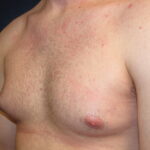
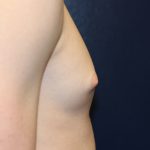
Enlargement of the male breast (Gynecomastia) is a fairly common condition which frequently is a source of embarrassment and insecurity. As I have noted previous, its development is related to the absolute and relative levels of the sex hormones testosterone and estrogen. These levels are significantly affected by puberty, aging, alcohol, and certain drugs, medications and diseases.
So what are some of the medications and drugs that are associated with male breast enlargement? The following enumerates several categories of medications and identifies some specific examples:
Anti-androgens that are used to treat enlargement or cancer of the prostate. These act to decrease the biological effect of male sex hormones. Some examples include finasteride (Proscar, Propecia), dutasteride (Avodart), flutamide (Eulexin); cyproterone (Androcur, Climen)
Anti-anxiety medications: diazepam (Valium)
Tricyclic antidepressants such as amitriptyline (Elavil), doxepin (Sinequan) and imipramine (Tofranil)
Antibiotics such as ketoconazole (Nizoral), isoniazid
Ulcer medications such as cimetidine (Tagamet)
Certain chemotherapy agents used in the treatment of cancer.
Cardiac medications such as digitalis (Digoxin) and calcium channel blockers such as amlodipine (Norvasc), diltiazem (Cardizem) and nifedipine (Procardia)
AIDS medications, most notably Efavirenz
Products containing tea tree oil or lavender oil
Miscellaneous medications including estrogen, spironolactone (Aldactone), and HCG (human chorionic gonadotropin)
The following are some of the street and illicit drugs associated with Gynecomastia:
Marijuana
Cocaine
Anabolic steroids
Methadone
Amphetamines
Heroin
The above listing is not meant to be comprehensive but instead as a guide. If you are experiencing increasing gynecomastia unrelated to puberty and may be on one of the agents listed above or a similar medication or drug, you may want to investigate this further and discuss it with your appropriate physician. In order to surgically address the enlargement induced by the medication or drugs (if appropriate), male breast reduction surgery can be considered. This may involve ultrasonic assisted liposuction of the breasts and/or direct excision of the enlarged glandular tissue.
If you would like additional information on male breast reduction surgery in the treatment of enlarged male breasts (gynecomastia) such as with ultrasonic assisted liposuction or on any other cosmetic surgery procedure, you can contact my office at 480-451-3000.
Steven H. Turkeltaub, M.D. P.C.
Scottsdale and Phoenix, Arizona
Many women request to have the appearance of their abdomens improved but they are not sure what it is that they need. Is it a tummy tuck? Liposuction? Or something else? How does one determine what is best?
A tummy tuck, also known as an abdominoplasty, is designed to address the lax skin and muscles of the abdomen. This can involve minor looseness that is confined to the lower abdomen (a mini tummy tuck), lax skin that is present both above and below the umbilicus (standard or full tummy tuck), and major excess of skin that hangs down in rolls (tummy tuck or a panniculectomy). Liposuction is best reserved for women who have localized fat deposits but relatively good skin and muscle tone. Of course, there are some gray areas where either procedure can result in an improved appearance though addressing slightly different issues depending on the patient’s primary concerns. There are also some situations where both liposuction and a tummy tuck should and can be done concurrently and others where I recommend first performing liposuction followed several months later by a tummy tuck.
In order to precisely determine whether a tummy tuck, liposuction or some sort of combination would be most appropriate for you, I would need to see you in consultation. To schedule an appointment regarding an abdominoplasty, liposuction, panniculectomy or any other cosmetic surgery procedure, you can call my office at 480-451-3000.
Steven H. Turkeltaub, M.D. P.C.
Scottsdale and Phoenix, Arizona