Male breast reduction surgery for gynecomastia (enlarged male breasts) is one of the more commonly performed procedures in men. The results from surgery can be quite dramatic and rewarding. Despite the perception that men don’t obsess or even focus on their appearance a whole lot, this is not entirely or always true. Many men do care and when it comes to the appearance of their breasts.
The underlying cause of gynecomastia can be the result of enlarged glandular breast tissue, increased fat accumulation or a combination of both. Liposuction is the treatment of choice when there is an excessive amount of fat. It typically involves one relatively small incision (around 1/4” to 3/8”) for each side either along the breast fold or at the bottom part of the areola. They usually heal in an inconspicuous manner.
Glandular breast tissue can’t be removed with liposuction – it needs to be excised directly which is accomplished though an incision placed along the lower half of the areola. By nature, this incision is much longer as compared to the one needed for liposuction alone.
A question that many men have, particularly those that are younger and not hirsute (hairy) is “how obvious or apparent will the scars be?”
When the incisions are meticulously repaired (like they always should be!) and treated with a scar gel postoperatively, the final results are usually fairly thin white lines that are not apparent from any significant distance. Sometimes, they are so inconspicuous to the point of being imperceptible (see photo). Regardless, the overwhelmingly positive results from gynecomastia surgery virtually always outweigh any scar that is a consequence of the procedure.
Scar along the bottom half of the right areola
So, if you or someone you know is considering breast reduction surgery for gynecomastia but concerns about the scars have been a major issue, reconsideration should be in order.
If you would like more information on male breast reduction surgery for gynecomastia or on any other plastic surgery procedure that I perform or to schedule a consultation with me, please call my office at 480-451-3000.
Steven H. Turkeltaub, M.D. P.C.
Scottsdale and Phoenix, Arizona
I have been seeing a marked increase in the number of men who are seeking treatment for gynecomastia (enlarged male breasts). This phenomenon, however, is not the result of a sudden epidemic of men who have significantly enlarged breasts. Instead it appears to be the result of greater awareness of the issue and the availability of very effective and safe treatment.
Women don’t have a monopoly on the desire to look the best they can. Men want to look good as well at least as regards certain areas. That is one of the major reasons men exercise and work out – having some nice pecs can do wonders for one’s ego, pride and attractiveness to women. Conversely, enlarged, feminized breasts can be the source of tremendous anxiety, self-consciousness and doubt.
The photos below show a typical case of gynecomastia in a 30 year old man – both before and after surgery which was performed using ultrasonic assisted liposuction. Some men may present with much larger breasts; others with just focal areas of involvement.
Gynecomastia. Frontal view before
Gynecomastia. Frontal view after
Side view before surgery
Side view after surgery
Oblique view before gynecomastia surgery
Oblique view after gynecomastia surgery
As you can see from these photos of gynecomastia and its treatment, the outcome can be very natural appearing masculine breasts with little tell-tale signs of surgery. This patient was extremely happy and appreciative of his results which had a positive impact on his daily life.
If you would like some additional information on male breast reduction surgery for the treatment of gynecomastia, on liposuction for other areas or to schedule a complimentary cosmetic consultation with me, you can contact my office at 480-451-3000.
Steven H. Turkeltaub, M.D. P.C.
Scottsdale and Phoenix, Arizona
Enlarged breasts in men can be quite distressing mentally and emotionally. Many feel extremely self-conscious, un-masculine, insecure and even depressed. Their presence can have a substantial negative impact on relationships with others, particularly women, and even in daily routines and sports. Fortunately, the surgical treatment for gynecomastia, or male breast enlargement, is usually not only quite effective but often, not that uncomfortable.
“No pain. No gain” is the slogan of many men usually with regards to sports and working out. For other things, well that may be a different story. Fortunately when it comes to gynecomastia surgery, you can obtain substantial improvement often without much pain.
A majority of the men that I operate on for male breast enlargement can be effectively treated with ultrasonic assisted liposuction with or without a small amount of direct excision of breast tissue. This technique involves the direct injection into the tissues of fluid contains a local anesthetic as well as a vasoconstrictor (a chemical that temporarily shrinks the diameter of blood vessels resulting in less bleeding and bruising). The effects of the local anesthesia persist for hours or more after surgery, making the recovery quite tolerable … even for a man!
Most of my patients indicate that the postoperative discomfort is fairly mild and usually well controlled with oral pain medications. In fact, many can return to a sedentary job in four to five days. I do recommend that they avoid sports and working out for around 2 ½ weeks.
Gynecomastia - Before surgery (frontal view)
After surgery (frontal view)
Gynecomastia - Before surgery (side view)
After surgery (side view)
If you would like more information on male breast reduction surgery, liposuction, or any other plastic surgery procedure that I perform or to schedule a complimentary consultation with me, please contact my office at 480-451-3000.
Steven H. Turkeltaub, M.D. P.C.
Scottsdale and Phoenix, Arizona
Gynecomastia, which is enlarged breasts in men, is a quite common occurrence most often related to persistence of hormonally related effects that occurred during puberty. (See Male Breast Enlargement: Is It Common? and Medication and Drug Causes of Enlarged Male Breasts (Gynecomastia) for other causes.) Their presence is often a cause of considerable anxiety, embarrassment, and self-consciousness and may affect the activities one engages in or even the clothes one wears for fear of being seen with this condition.
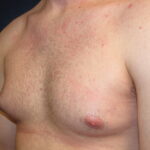
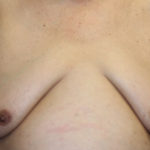
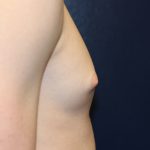
The degree of breast enlargement in gynecomastia varies from essentially imperceptible to anyone else but the affected person all the way to massive, droopy DD or larger breasts. The surgical treatment including the extent and techniques employed, therefore, would also vary accordingly.
The following photos are some examples of gynecomastia, from mild to quite large:
If you would like to schedule a consultation, obtain additional information on male breast reduction surgery for the treatment of enlarged male breasts (gynecomastia) including ultrasonic assisted liposuction or want to inquire about another cosmetic surgery procedure, please contact my office at 480-451-3000.
Steven H. Turkeltaub, M.D. P.C.
Scottsdale and Phoenix, Arizona
Enlargement of the male breast (Gynecomastia) is a fairly common condition which frequently is a source of embarrassment and insecurity. As I have noted previous, its development is related to the absolute and relative levels of the sex hormones testosterone and estrogen. These levels are significantly affected by puberty, aging, alcohol, and certain drugs, medications and diseases.
So what are some of the medications and drugs that are associated with male breast enlargement? The following enumerates several categories of medications and identifies some specific examples:
Anti-androgens that are used to treat enlargement or cancer of the prostate. These act to decrease the biological effect of male sex hormones. Some examples include finasteride (Proscar, Propecia), dutasteride (Avodart), flutamide (Eulexin); cyproterone (Androcur, Climen)
Anti-anxiety medications: diazepam (Valium)
Tricyclic antidepressants such as amitriptyline (Elavil), doxepin (Sinequan) and imipramine (Tofranil)
Antibiotics such as ketoconazole (Nizoral), isoniazid
Ulcer medications such as cimetidine (Tagamet)
Certain chemotherapy agents used in the treatment of cancer.
Cardiac medications such as digitalis (Digoxin) and calcium channel blockers such as amlodipine (Norvasc), diltiazem (Cardizem) and nifedipine (Procardia)
AIDS medications, most notably Efavirenz
Products containing tea tree oil or lavender oil
Miscellaneous medications including estrogen, spironolactone (Aldactone), and HCG (human chorionic gonadotropin)
The following are some of the street and illicit drugs associated with Gynecomastia:
Marijuana
Cocaine
Anabolic steroids
Methadone
Amphetamines
Heroin
The above listing is not meant to be comprehensive but instead as a guide. If you are experiencing increasing gynecomastia unrelated to puberty and may be on one of the agents listed above or a similar medication or drug, you may want to investigate this further and discuss it with your appropriate physician. In order to surgically address the enlargement induced by the medication or drugs (if appropriate), male breast reduction surgery can be considered. This may involve ultrasonic assisted liposuction of the breasts and/or direct excision of the enlarged glandular tissue.
If you would like additional information on male breast reduction surgery in the treatment of enlarged male breasts (gynecomastia) such as with ultrasonic assisted liposuction or on any other cosmetic surgery procedure, you can contact my office at 480-451-3000.
Steven H. Turkeltaub, M.D. P.C.
Scottsdale and Phoenix, Arizona
Male breast enlargement, also known as gynecomastia, is a relatively common occurrence. Its development is related to the absolute and relative levels of the sex hormones testosterone and estrogen in men. These hormones can be affected by such factors as puberty, aging, drugs, medication, alcohol and certain diseases.
Just how common is gynecomastia? During puberty, around two thirds of males will develop some degree of breast enlargement which can often be tender. This is related to the fluctuation of hormone levels that occur as a normal part of adolescent development. Typically, seventy five percent of males with gynecomastia will have resolution within two years and around ninety percent by three years. That leaves around ten percent of pubertal breast enlargements that will persist with some claiming an even higher incidence. Therefore, without any additional precipitating causes, the presence of enlarged breasts in men in their late teens, twenties and up just related to pubertal changes is quite common.
As the production of testosterone decreases with aging, the incidence of gynecomastia increases. This may first be noticed around ages 40 to 50 and then become more prominent with time. As many as twenty five to forty percent of males between ages 50 and 80 do have male breast enlargement. This can further be exacerbated by medications taken to treat common medical problems occurring during this stage of life such as for an enlarged prostate.
Obesity also can result in enlarged male breasts. This is often referred as pseudogynecomastia rather than true gynecomastia but the outcome is the same – undesirably enlarged breasts. Weight loss may resolve most if not all of the enlargement.
The treatment for gynecomastia which is surgery is usually quite successful, physically and mentally.
If you would like additional information on the treatment of male breast enlargement or any other cosmetic surgery procedure, you can contact my office at 480-451-3000.
Steven H. Turkeltaub, M.D. P.C.
Scottsdale and Phoenix, Arizona