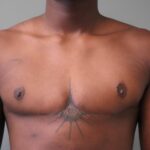
For many transgender men (FTM) and nonbinary individuals (FTN), gender-affirming top surgery is a very important step toward creating a chest that better reflects their gender identity and personal goals. Although FTM (female-to-male) top surgery and FTN (female-to-nonbinary) top surgery are often discussed as separate procedures, they actually have many similarities.
In many cases, the same surgical techniques are used for both transgender men and nonbinary patients. The major difference is often the appearance the patient wants to achieve.
Most transgender men want a flat, masculine-looking chest. Many nonbinary individuals want a similar result, while others may prefer a more androgynous chest, retain some breast tissue, change the size or position of the nipples or eliminate the nipples altogether.
Because of this range of goals, there is no single operation that is appropriate for everyone. FTM and FTN top surgery should be customized to the patient’s anatomy, preferences and desired chest appearance.
This article explains the similarities and differences between FTM and FTN top surgery, the most common surgical techniques, nipple options, recovery and factors to consider when choosing a procedure.
What Is the Goal of FTM and FTN Top Surgery?
The basic purpose of top surgery is to create a chest that is more consistent with an individual’s gender identity and personal sense of self.
For a transgender man, this usually means creating a flat, masculine chest. This generally involves removing breast tissue and excess skin and, when desired, resizing and repositioning the nipple-areola complexes to produce a more traditionally masculine appearance. A relatively small percentage elect not to have nipple-areola complexes.
Nonbinary top surgery can have a wider range of goals.
Some nonbinary patients want a chest that is essentially indistinguishable from a typical masculine chest. Others want a more neutral or androgynous appearance. Some want to retain a small amount of breast volume rather than having all of the breast tissue removed. There are also many patients who do not want nipples.
This is why gender identity alone does not determine the appropriate surgical technique. Two patients with different gender identities may undergo exactly the same operation, while two nonbinary patients may choose very different procedures.
The desired result should be the starting point for planning top surgery.
Common FTM and FTN Top Surgery Techniques
Several surgical approaches are commonly used for both FTM and FTN top surgery. The choice depends on breast size, skin elasticity, chest anatomy, nipple position, the amount of excess skin and the patient’s goals.
The three most frequently discussed techniques are double-incision mastectomy, periareolar top surgery, and keyhole top surgery.
Double-Incision Top Surgery
Double-incision mastectomy is the most common technique used for FTM top surgery and is also frequently used for nonbinary patients who want a flat chest.
It is particularly useful for patients who have:
• Larger breasts
• Significant excess skin
• Less elastic skin
• Sagging or drooping breast tissue
• A desire for substantial reshaping of the chest
During double-incision top surgery, incisions are made across the lower portion of each side of the chest. Breast tissue and excess skin are removed, and the remaining skin is contoured to create the desired chest shape.
One of the major advantages of this approach is the degree of control it gives the surgeon over both tissue removal and chest contouring.
What Happens to the Nipples?
When nipples are desired, the nipple-areola complexes are commonly removed, reduced in size, reshaped, and repositioned as free nipple grafts. This allows the surgeon to place the nipples in a location that is generally more appropriate for a masculine chest. The size and shape can also be customized.
Some patients, however, choose to have no nipples. This may be particularly appealing to individuals who prefer a nipple-free chest or do not want the additional considerations associated with nipple grafting.
The tradeoff with double-incision surgery is that it produces longer scars across the chest. However, for many patients, the ability to remove excess skin and create a flatter, more defined chest makes this an appropriate choice.
Periareolar Top Surgery
Periareolar top surgery, sometimes called concentric-circle top surgery, may be appropriate for patients with relatively small breasts and good skin elasticity. The procedure involves an incision around the areola. A larger circle of skin can be removed, along with breast tissue and the remaining skin is tightened around the smaller areola.
One potential advantage is that the resulting scar is positioned around the edge of the areola rather than extending across the chest. The nipple-areola complex generally remains attached to the underlying tissue and blood supply which can better preserve of nipple viability and appearance. There may be retained sensation which is not present after the free nipple graft.
However, periareolar surgery is not appropriate for everyone. If there is substantial excess skin and the procedure is still done, the results can be loose or wrinkled skin, significant contour irregularities and stretched out areolas – a poor aesthetic outcome. Instead, the double incision approach should be employed.
For the right patient, however, periareolar top surgery can provide a flatter chest with relatively limited scarring.
Keyhole Top Surgery
Keyhole top surgery is generally reserved for individuals with small amounts of breast tissue and good skin elasticity. Rather than making an incision completely around the areola, a relatively small incision is made along the lower border of the areola. Breast tissue can then be removed through this opening. Because the nipple-areola complex remains connected to the surrounding tissue, its blood supply and nerve connections are generally maintained.
A limitation of keyhole surgery is that the surgeon has less ability to alter the size or position of the areola. For that reason, the patient’s existing nipple size and position need to be reasonably compatible with the desired result.
Keyhole surgery can offer very limited visible scarring, but it should not be viewed simply as a “smaller” version of double-incision surgery. Patient selection is critical.
Nonbinary Top Surgery May Involve Breast Reduction
One of the most important differences between traditional FTM top surgery and some forms of nonbinary top surgery is that not every nonbinary patient wants a completely flat chest. Some individuals want to significantly reduce the size of their breasts while retaining some breast volume. In these situations, a modified breast reduction may be a better choice than a complete mastectomy.
Breast Reduction for a Nonbinary Chest
A breast reduction removes a portion of the breast tissue rather than removing essentially all of it. The goal may be to create a substantially smaller chest while maintaining some volume. The amount of tissue remaining can be tailored to the patient’s preferences and anatomy.
Some patients may want a chest that is approximately an A or B cup, while others may want to retain more volume. It is important to recognize that cup size is only a general reference. The final appearance depends on many factors, including chest width, body proportions, skin elasticity, breast shape, and the amount of tissue removed.
Nipple considerations are also important. Depending on the patient’s anatomy and the amount of tissue being removed, the nipple-areola complex may be preserved on its existing blood supply. In other circumstances, a free nipple graft may be necessary or preferred. For some nonbinary patients, the possibility of preserving nipple sensation may be a consideration when choosing between surgical approaches.
Customized Approaches to Nonbinary Top Surgery
Not every patient’s goals fit neatly into the traditional categories of mastectomy or breast reduction. In selected cases, a surgeon may combine techniques to create a more individualized result.
For example, tissue removal may be combined with liposuction and chest contouring to improve the transition between the chest and the surrounding areas, including the lateral chest and underarm region. This type of customization can be especially useful for someone seeking an androgynous chest rather than a conventionally masculine one.
The goal of nonbinary top surgery is not necessarily to remove as much tissue as possible. Instead, the objective is to create a chest that matches the individual’s desired gender expression.
Nipple Size, Position, and Sensation in FTM and FTN Top Surgery
Nipple appearance is an important part of the overall result of top surgery.
For transgender men seeking a traditionally masculine chest, the nipple-areola complexes are usually made smaller and repositioned when possible. Their location is planned in relation to the overall chest contour and the patient’s body proportions.
Nonbinary patients may have more varied preferences.
A patient may want:
• Traditionally masculine nipples
• Smaller, less prominent nipples
• A more neutral nipple position
• Nipples that remain closer to their original location
• No nipples at all
There is no universally correct nipple size or position for nonbinary top surgery.
What About Nipple Sensation?
Sensation is another factor that should be discussed before surgery.
With keyhole and some periareolar procedures, the nipple-areola complex remains connected to the surrounding tissue and its nerve supply. Sensation may therefore be better preserved, although changes in sensation can still occur.
With a free nipple graft, the nipple is completely separated from its original blood supply and nerves before being grafted into a new location. Consequently, the long-term sensation will be minimal at best.
FTM vs. FTN Top Surgery: Key Differences
Although the surgical techniques often overlap, the goals can differ. The following table demonstrates why simply asking whether someone is seeking “FTM” or “FTN” surgery does not necessarily determine which operation is best.
|
Is FTM Top Surgery the Same as FTN Top Surgery?
Sometimes, but not always.
A transgender man and a nonbinary patient may both undergo a double-incision mastectomy with free nipple grafts and have very similar surgical experiences and results.
On the other hand, a nonbinary patient may choose a breast reduction specifically because they want to retain some breast volume. Another may choose a double-incision procedure without nipples. Still another may be an excellent candidate for keyhole surgery.
Therefore, the distinction is often less about the technical name of the operation and more about the desired chest appearance.
Recovery After FTM and FTN Top Surgery
When the same surgical technique is performed, recovery from FTM and FTN top surgery is generally identical.
The recovery period includes swelling, bruising, temporary changes in sensation, incision care and restrictions on physical activity. The specific recovery timeline depends on the procedure performed as well as individual healing.
Patients undergoing double-incision surgery, for example, generally have more extensive incisions than patients undergoing keyhole surgery. Patients who undergo nipple grafting also have specific postoperative care requirements for the grafts.
It is important to follow the surgeon’s instructions regarding wound care, compression garments, exercise, lifting, and return to normal activities.
The chest will also continue to change as swelling subsides and scars mature. The appearance during the first several weeks should not be considered the final result.
How Do You Choose the Right Top Surgery Procedure?
The best top-surgery technique is not necessarily the procedure that creates the smallest scar or removes the greatest amount of tissue.
Instead, the goal is to find the procedure that provides the best combination of:
• Desired chest appearance
• Appropriate chest contour
• Skin quality and elasticity
• Breast size and shape
• Nipple size and position
• Nipple-sensation goals
• Acceptable scarring
• Long-term expectations
This requires an individualized consultation.
Before surgery, patients should be prepared to discuss not only their gender identity but also what they actually want their chest to look like. Do you want a completely flat chest? Would you prefer to retain some volume? Do you want traditionally masculine nipples, smaller nipples, or no nipples? Is nipple sensation important to you? How important is minimizing visible scarring?
These questions can help guide the surgical plan.
FTM and FTN Top Surgery Should Be Individualized
Although FTM and FTN top surgery are often described as separate procedures, there is substantial overlap between them. The same techniques—including double-incision mastectomy, periareolar surgery, and keyhole surgery—can be appropriate for both transgender men and nonbinary patients.
The greatest difference is often the patient’s desired result.
Most transgender men seek a flat, masculine chest and many nonbinary individuals want the same. Other gender nonbinary individuals may prefer an androgynous chest, retain some breast tissue, alter the nipple appearance in a different way or eliminate the nipples altogether.
For that reason, top surgery should be approached as a customized gender-affirming procedure rather than a one-size-fits-all operation.
An experienced plastic surgeon can evaluate the patient’s anatomy, explain the advantages and limitations of each technique and help determine which approach is most likely to achieve the desired result.
Considering FTM or FTN Top Surgery?
Steven H. Turkeltaub, MD is board certified by the American Board of Plastic Surgery and has extensive experience in plastic surgery and gender-affirming procedures.
If you are considering FTM or FTN top surgery, a consultation can help you understand your surgical options and determine which approach may best fit your anatomy and personal goals.
To learn more about gender-affirming top surgery or schedule a consultation, contact the Arizona Center for Aesthetic Plastic Surgery at (480) 451-3000 or through the online contact form.