
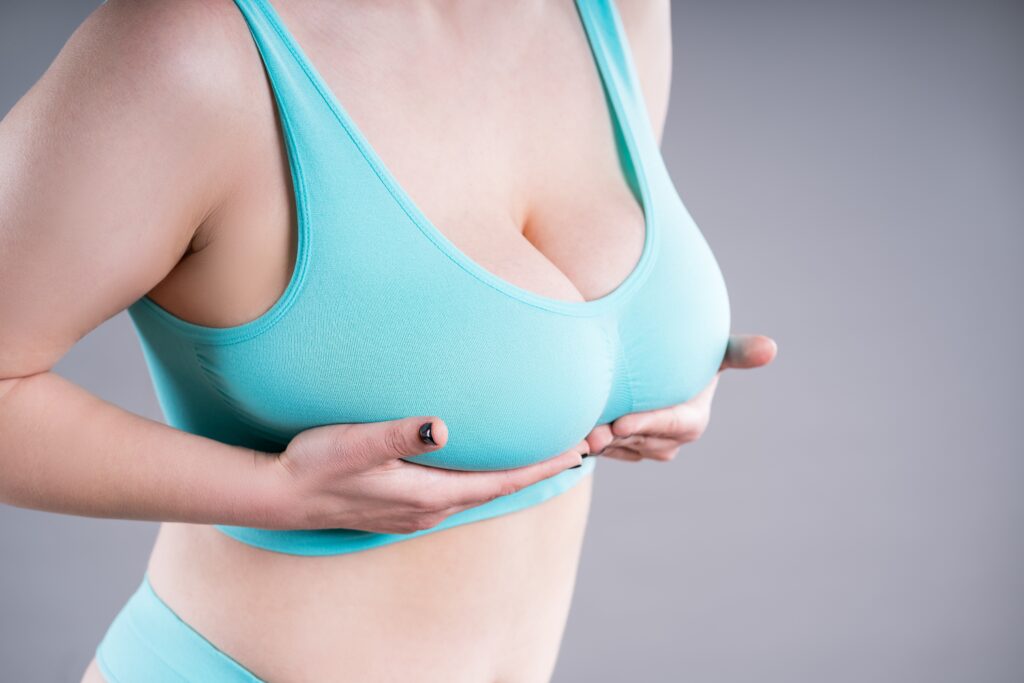
Breast ptosis, more commonly known as breast sagging, is among the most common aesthetic concerns for women after pregnancy, breastfeeding, weight loss or the effects of aging. This loss in firmness, shape and positioning is not caused by aging alone but rather by measurable changes in the skin, tissue quality and the internal structures that support the breast shape over time.
Most women will notice some degree of sagging at some point in their life, but these changes can often become more apparent after pregnancy, weight fluctuations or menopause.
In this blog, Dr. Steven Turkeltaub, a renowned board-certified plastic surgeon in Scottsdale, sheds light on how both anatomical and lifestyle factors can lead to the gradual development of droopy breasts as well as solutions to restore younger-looking contours with long-term results.
What Factors Contribute to Breast Sag?
While medically harmless, the development of breast ptosis often causes aesthetic dissatisfaction. Many women with saggy breasts report feeling reduced confidence, lower self-esteem and greater difficulty finding complementary clothing, among other issues.
Breast sagging is usually driven by a combination of structural and lifestyle factors including:
- Loss of skin elasticity: Skin relies on collagen and elastin to keep it firm. These essential proteins decline with age, reducing the skin’s ability to hold the breast tissue in place as it loses elasticity.
- Changes in glandular and fatty tissue: The breasts are composed of glandular (breast) tissue, fat and connective ligaments. If glandular tissue shrinks and is replaced by fat over time, this generally makes the breasts less firm and more prone to shifting downward.
- Stretching of the breast ligaments: These internal ligaments act like an internal support structure. Repeated stretching from gravity, a heavier breast size or a lack of support during physical activity can cause these ligaments to loosen permanently.
- Pregnancy and breastfeeding: Rapid expansion and contraction of the breast tissue during pregnancy and nursing can stretch the skin beyond its ability to fully contract or “snap back” to its pre-pregnancy state.
- Weight fluctuations: Significant weight gain followed by loss can stretch the skin repeatedly, compounding the natural effects of aging on the breasts.
- Menopause: Hormonal shifts during menopause reduce the density of glandular tissue, often resulting in a softer, less-supported breast structure.
- Smoking: Smoking breaks down elastin fibers and reduces blood flow to the skin which can accelerate sagging beyond the effects of the natural aging process alone.
- Genetics: Some people are simply predisposed to less resilient connective tissue due to genetics, meaning breast sag can occur earlier or more noticeably regardless of lifestyle.
- Excessive sun exposure and tanning booths: Ultraviolet rays from the sun and tanning booths damage collagen and elastin in the skin resulting in a loss of elasticity. This leads to an acceleration of drooping as well as skin aging.
Fortunately, patients dissatisfied with the look and/or feel of their breasts over time do not have to simply live with these changes forever. There are several effective solutions to restore a patient’s pre-pregnancy breast shape or to simply rejuvenate the breasts to gain a more defined and projected breast profile.
Solutions to Age-Related Breast Changes
For those women who are unhappy with their volume loss and/or droopy breasts, two surgical approaches are commonly utilized, either separately or in combination, depending on each person’s goals.
Breast Augmentation with Implants
Breast implants address volume loss by restoring fullness in the upper poles of the breasts and creating rounder, more youthful breast contours. For those women who would like to enhance their current breast size, silicone or saline implants can be used in order to redefine shape and emphasize one’s silhouette.
In general, breast augmentation without a lift is most successful for patients who have lost volume but whose skin retains reasonably good elasticity and there is minimal sag. That said, implants alone won’t correct significant drooping as they’re designed to add fullness without repositioning descended tissue.
Breast Lift Surgery (Mastopexy)
A breast lift is often the gold standard of treatment for droopy breasts. During the customized procedure, Dr. Turkeltaub removes excess skin and reshapes the remaining tissue, repositioning the breasts and areolas to a more youthful location on the chest wall. Unlike implants, a lift doesn’t add volume. This makes a mastopexy ideal for patients whose main concern is a loss of projection or ptosis rather than reduced fullness.
Breast Lift with Implants
Many women can benefit from combining a breast lift with a breast augmentation in a breast lift with implants, especially if they’ve experienced volume loss and sagging — a common occurrence after pregnancy or significant weight changes. This approach restores fullness while also correcting positioning, offering a more comprehensive rejuvenation for good surgical candidates than either procedure alone.
Choosing the right procedure for each patient depends on individual anatomy, goals and the degree of ptosis observed which is why a consultation with a board-certified plastic surgeon like Dr. Turkeltaub is an essential first step. A thorough evaluation can determine whether additional volume, a lift or both approaches are necessary to achieve the most natural, long-lasting results.
Dr. Turkeltaub performs a variety of breast procedures to rejuvenate and reshape the breasts. The right solution for your needs depends on the anatomical factors causing ptosis, a loss of volume or other changes in your breasts.
For personalized guidance on the best treatment options to address your concerns, don’t hesitate to contact Dr. Turkeltaub at our Scottsdale practice for more information.