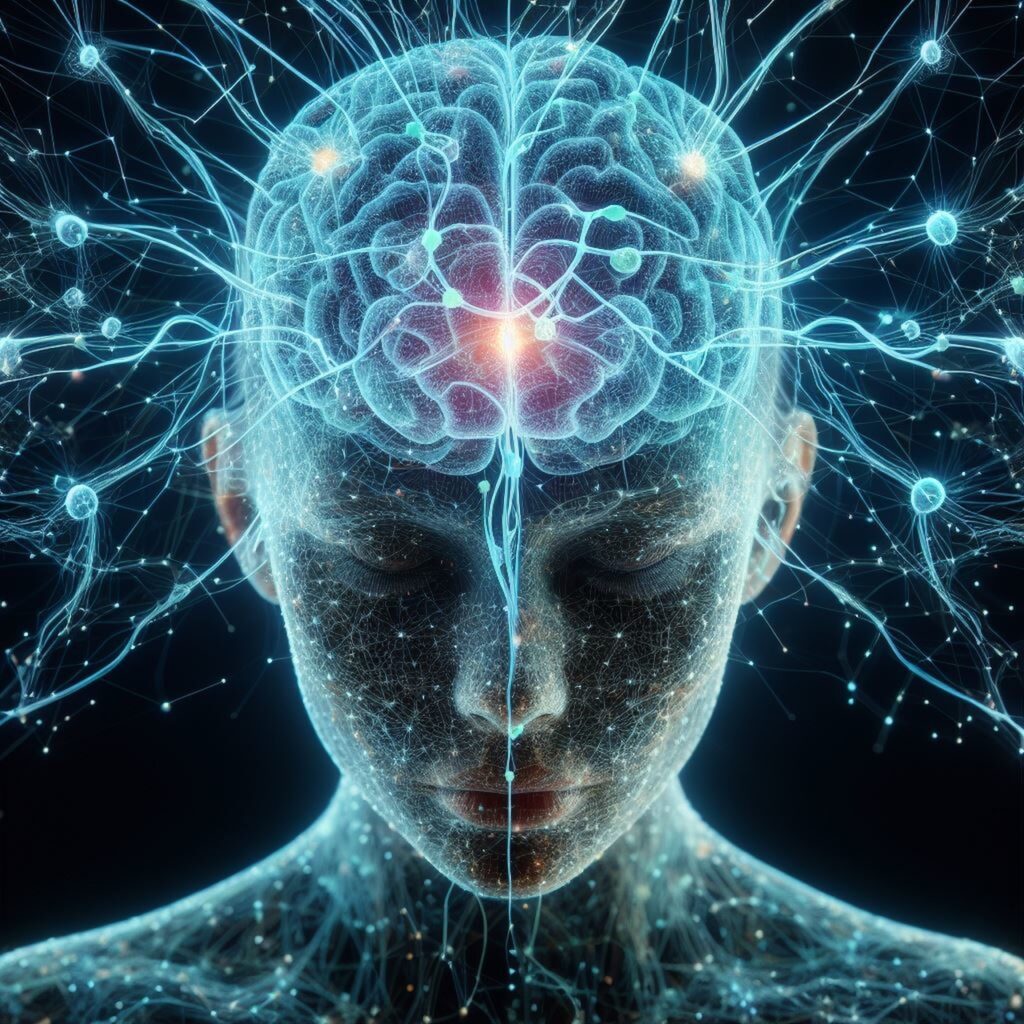
For decades, scientists have been fascinated by a very complex question in human biology:
“How does the brain give rise to our sense of gender?”
Gender identity—our internal sense of being male, female, both, neither or somewhere in between—feels deeply personal. However, research has long suggested that it also has biological roots.
Over the last 30 years, neuroscientists have used advanced imaging, post-mortem (after death) studies and developmental biology to explore whether the brains of transgender and nonbinary individuals show measurable differences compared to cisgender men and women. While no single “brain structure” determines gender identity, a consistent and fascinating pattern has emerged:
Many transgender people show anatomical or functional characteristics that resemble the gender they identify with and not necessarily the sex they were assigned at birth.
This article explores what researchers have found so far about brain anatomy in transgender and gender nonbinary individuals, how those findings compare with cisgender males and females, and what the similarities and differences might mean. I have tried to simplify the scientific terminology and findings to make this a bit more understandable.
The Brain and Gender Identity: A Brief Overview
The brain contains several networks involved in identity, perception of self, body awareness, emotion and social cognition. Gender identity appears to arise from the integration of many of these systems.
There is not a single “gender center”.
This gives rise to a fascinating question which is the focus of much research:
“Are there consistent patterns in transgender and nonbinary brains that differ from cisgender patterns?”
The answer, across many studies, is yes—though not in a simple or uniform way.
Structural Brain Differences Found in Research
Scientists have examined multiple brain regions, including white matter, gray matter and specific neural nuclei. Across studies, several general trends have been reported.
Certain brain regions in transgender individuals resemble those of their identified gender
Some studies of transgender women have shown that specific structures—such as parts of the hypothalamus or limbic system—display patterns more often found in cisgender women than in cisgender men.
Similarly, some studies of transgender men show structural features that more closely resemble cisgender male patterns.
These are not universal finding but they appear consistently enough to be meaningful.
Brain connectivity patterns often align with identified gender
Using functional imaging, researchers have found that:
- Transgender women may show connectivity patterns in networks involved in self-perception, body awareness and identity that look more similar to cisgender women.
- Transgender men may show patterns more similar to cisgender men in areas tied to spatial processing, self-image and certain emotional networks.
This doesn’t imply “better” or “worse” connectivity—only that the patterns align with one’s lived gender.
White matter microstructure shows intermediate or affirmed-gender patterns
White matter—the “communication wiring” of the brain—has been studied using diffusion imaging. Some transgender individuals show white-matter patterns closer to their identified gender, while others exhibit a blend of both masculine and feminine patterns. This suggests that gender identity might arise from a spectrum of neural traits rather than a binary distinction.
The Brains of Nonbinary Individuals: What We Know So Far
Because nonbinary identities have only recently entered mainstream scientific conversation, research is newer and more limited. However, early results indicate:
- Nonbinary people often show “in-between” structural patterns. Some studies report that nonbinary participants may exhibit patterns of gray matter or connectivity that do not align strictly with either cisgender group.
- Brain networks related to self-concept and body perception may show unique patterns. These differences are subtle and not “diagnostic,” but they suggest that nonbinary identities are not simply a mix of male and female traits—they may reflect distinct neural organization.
- Variability is high. Nonbinary individuals are diverse and early research supports the idea that their neural patterns may be equally varied.
What About Hormone Therapy?
One of the most fascinating findings in neuroscience is that the adult brain is far more adaptable than once believed. Gender-affirming hormone therapy—whether estrogen or testosterone—can change brain structure and connectivity over time.
Estrogen therapy in transgender women has been associated with:
- Reduced volume in certain regions typically larger in men
- Increased connectivity patterns more common in women
- Changes in white-matter microstructure
Testosterone therapy in transgender men has been associated with:
- Increases in gray-matter volume in certain regions typically larger in men
- Altered white-matter pathways
- Shifts in brain metabolism toward male-typical patterns
These changes occur gradually and do not erase all pre-transition brain features. However, they reinforce the idea that the brain responds strongly to sex hormones throughout life—not just during puberty.
This also means that some early studies that did not account for hormone use may reflect mixed influences from both identity and hormonal transition.
Similarities Between Transgender and Cisgender Brains
Even with the differences described above, it is important to note that brains across all groups—cisgender, transgender and nonbinary—are far more similar than they are different.
Key points of similarity:
- All groups show substantial overlap in brain size, structure and cognitive function.
- Gender identity does not correlate with intelligence, mental health or overall brain capacity.
- Many differences within each group, such as between two cisgender women, are greater than average differences between groups.
This reinforces the idea that while gender identity has biological roots, it does not make one type of brain “more male” or “more female” in a rigid or hierarchical sense.
Significance of These Findings
These anatomic findings support the idea that gender identity has real biological underpinnings. They reflect deep-seated patterns in brain development and function and not necessarily misguided conscious choices, fads or manifestations of mental illness.
Understanding that gender identity is a natural variation of human biology can help decrease misconceptions, prejudice and mental health stress related to invalidation of this variation.
What These Studies Don’t Mean
Though these brain findings are fascinating they should be put in relative perspective and not be misinterpreted or overinterpreted. Consequently, the following should be understood:
- There is no transgender brain scan. That is, you can’t diagnose gender identity with brain imaging.
- Differences do not imply abnormalities. Brain variations found in transgender and nonbinary individuals are normal variations and not defects.
- Brain patterns do not determine gender identity with certainty. Biology contributes to gender identity but identity also involves personal experience, emotions, culture and social context.
- Research does not claim that all transgender people have identical brain features. There is considerable diversity within all groups.
Conclusion
The science of gender is still evolving but research and present information point to the clear conclusion that transgender and nonbinary people often have brain structures and functional patterns that reflect their gender identity.
These differences are subtle, complex and exist within a broad spectrum of normal human variation. Collectively, however, they provide strongly supportive and concrete evidence that gender identity is not imagined or arbitrary. It has measurable and identifiable biological foundations.
The bottom line is that for many (most?) individuals who identify as transgender or gender binary this may be, at least partially, pre-determined biologically.
This information should provide crucial perspective and provoke thoughtful reassessment of society’s attitudes regarding those who identify in this gender realm.
Steven H. Turkeltaub, M.D. P.C.
Scottsdale and Phoenix, Arizona